Announcing the 2025 Backing Small Businesses Grant Recipients
We are thrilled to announce the recipients of the 2025 Backing Small Businesses grant program, supported by American Express.

Marion, Iowa © Tasha Sams
We work in collaboration with thousands of local partners and grassroots leaders across the nation who share our commitment to advancing shared prosperity, creating resilient economies, and improving quality of life.

Emporia, Kansas © Emporia Main Street
Made up of small towns, mid-sized communities, and urban commercial districts, the thousands of organizations, individuals, volunteers, and local leaders that make up Main Street America™ represent the broad diversity that makes this country so unique.

Chicago, Illinois © Main Street America
Looking for strategies and tools to support you in your work? Delve into the Main Street Resource Center and explore a wide range of resources including our extensive Knowledge Hub, professional development opportunities, field service offerings, advocacy support, and more!

Waterloo, Iowa © Main Street Waterloo
Your one-stop-shop for all the latest stories, news, events, and opportunities – including grants and funding programs – across Main Street.

Kendall Whittier — Tulsa, Oklahoma © Kendall Whittier Main Street
Join us in our work to advance shared prosperity, create strong economies, and improve quality of life in downtowns and neighborhood commercial districts.
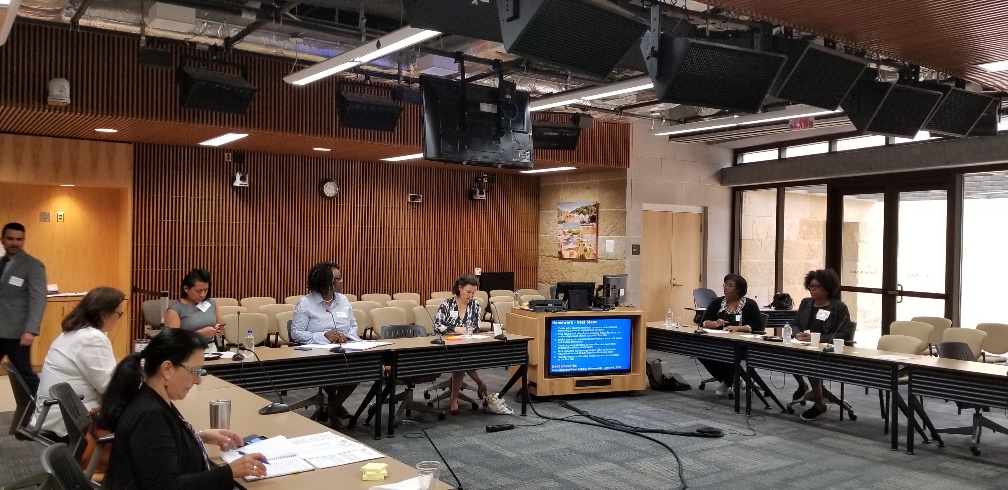
NLC meeting at City Hall in Austin, Texas.
After spending a year serving as a project advisor to the City of Austin, Texas, through the National League of Cities (NLC), PolicyLink and the Urban Land Institute (ULI) jointly-supported Equitable Economic Development Fellowship (EED), I am in complete awe of Austin’s, and the other five city fellow’s, commitment to creating equitable, inclusive, and transparent cities.
The Equitable Economic Development Fellowship is a two-year, one million-dollar effort funded by the Surdna Foundation and the Open Society Foundations to help equity, transparency, sustainability and community engagement become driving forces in local economic development efforts. The 2017 cohort consisted of a team of city staff and policy makers from Austin, Baltimore, Louisville, Nashville, Phoenix and Sacramento. The fellowship empowers each team to work on issues or projects aimed at spurring economic growth for all its residents and small business owners in their respective cities. The teams were provided access to economic development experts from across the country through one-on-one technical assistance, leadership training and recommendations to help them accomplish their goals.
Each project was as diverse as the cities represented in EED’s 2017 fellowship:
Baltimore, Maryland
Baltimore sought to spur investment in the Central Park Heights neighborhood which has not seen a major investment in over three decades. The City intends to leverage public resources, anchor institutions and engage the community to achieve equitable economic development in the neighborhood by supporting local businesses, entrepreneurs, encouraging needed neighborhood retail and services, and providing workforce development in the neighborhood.
Louisville, Kentucky
The City sought to create a culture of entrepreneurship in the Parkland and Russell neighborhoods to bring needed goods and services to neighborhood, connect existing entrepreneurs to the broader regional economy, and expand social, professional, and economic networks that help make new and existing businesses successful.
Nashville, Tennessee
City leadership and staff members focused on implementing a people-centered strategy to retain and grow the urban manufacturing sector and connect residents to economic opportunities in the Promise Zone neighborhood.
Phoenix , Arizona
Phoenix is extending their light rail into the South-Central neighborhood. The City dedicated time in the fellowship to developing strategies to increase community ownership in the corridor through an inclusive business resource system and implementation of a workforce development program along the corridor extension.
Sacramento, California
The City worked to develop strategies and priorities that could stimulate investment in neglected commercial corridors (Del Paso, Marysville, Franklin and Stockton Boulevards) to benefit neighborhood residents and businesses.
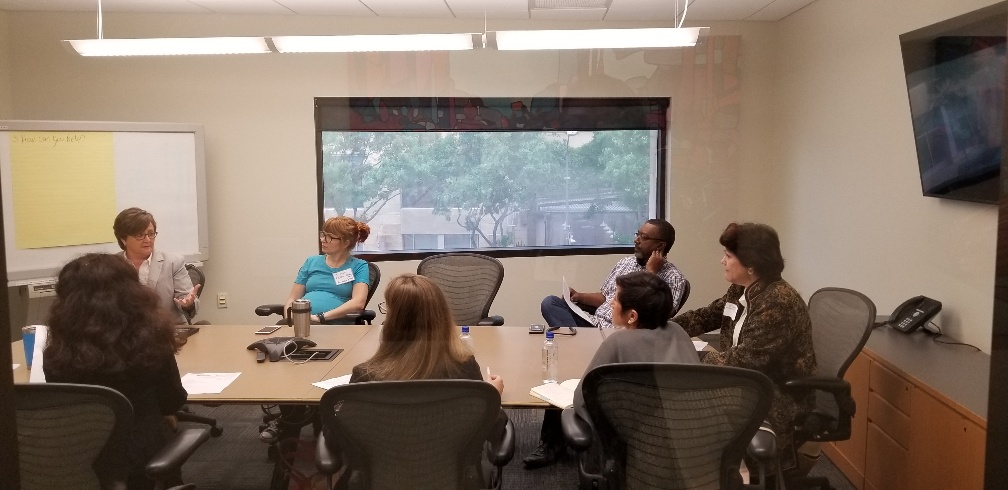
NLC roundtable discussion at City Hall in Austin, Texas.
Each city was assigned a designated faculty advisor to serve as a mentor and work directly with the team throughout the year--I had the honor of working with and serving as a faculty advisor to the City of Austin. During the year-long fellowship, the following technical services were provided to each team:
Hosted in Minneapolis, all participating cities re-convened to share their final project update, wins, lessons learned and changes to their approach in equitable economic development. The retreat focused on building a shared sense of the practice related to an equitable approach to economic development and what is next for each city beyond the EED Fellowship. The cohort also heard from guest speakers and visited sites in Minneapolis implementing this work on the ground.
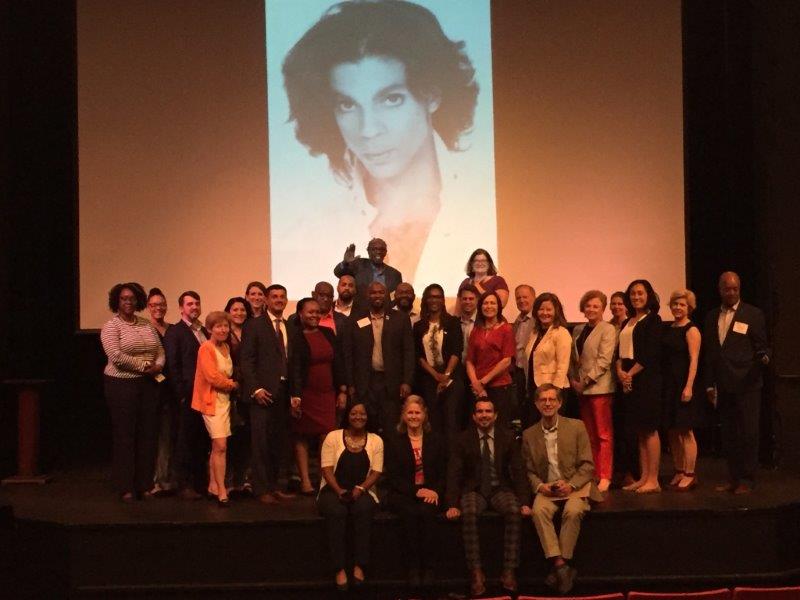
NLC Site visit and tour at the Capri Theater in North Minneapolis.
The Equitable Economic Development Fellowship was deliberate and intentional. Through this experience, I learned from mayors, city staff, and local experts implementing equitable/inclusion policies and strategies to lift all members of its communities together. As a part of this groundbreaking fellowship, these committed, passionate representatives looked inward at their unique assets to build up what is special about their respective cities. Faculty advisors and national experts were invited guests into these communities to offer their years of experiences and perspectives in the field of economic development. The common thread in all discussions was to make certain all insights and tools provided helped each city accomplish their goals of equity and inclusion.
As the National Main Street Center’s Director of Urban Programs, this engagement reaffirmed that in order to provide a foundation for equitable neighborhood prosperity, one must focus comprehensively on the health of commercial districts and the people that those places serve. As NMSC works with communities to bring prosperity back to their neighborhood corridors, our priority is to partner with organizations such as NLC, ULI, PolicyLink and local leaders across the country.
The UrbanMain initiative continues to respond to the growing need to work with economic development practitioners in large cities as they seek to:
About the author:
As NMSC's Director of Urban Programs, Dionne Baux leads the initiative to broaden the Center’s offerings and engagement in urban neighborhood commercial districts. Dionne has over a decade of experience in project coordination in the fields of urban economic development and commercial district revitalization. She has extensive expertise engaging community stakeholders, identifying and implementing projects in conjunction with community based organizations, government institutions, and real estate development, as well as supporting capacity building opportunities.
We invite you to learn more about UrbanMain by signing up for our monthly newsletter, Neighborhood News. Each issue of Neighborhood News features updates on UrbanMain projects, perspectives from UrbanMain network members, and news and opportunities.
We are thrilled to announce the recipients of the 2025 Backing Small Businesses grant program, supported by American Express.

Chief Innovation Officer Matt Wagner, Ph.D., shares his annual predictions for the trends that will impact Main Streets and small businesses in 2026.
This conversation between Main Street America's Director of Research and the owner of a plant shop in Tacoma, Wash., reveals the unique struggles of today's storefront business owners.

